KOUNATSURI 2Pack Car Door Handle: Does It Actually Help?
A close look at the KOUNATSURI 2Pack Car Door Handle: 400lb capacity, padded grip, and who this U-shaped latch support really fits.
As an Amazon Associate I earn from qualifying purchases. Some links on this site are affiliate links, if you buy though them I may make a commission at no extra cost to you.
Quick Verdict
400 pounds of rated capacity in something that fits in a glove box, for a task most people fail at with a door frame and a prayer. The catch is the latch: no U-shaped striker, no handle. Everything else about this design is sound.
Buy if you:
- push off the door frame or steering wheel to stand and it hurts your wrists or knees
- are helping an aging parent who transfers in and out of a car several times a day
- want a grab point in two cars at once, since it ships as a 2-pack
- want a seat belt cutter and window breaker living in the door pocket anyway
Skip if you:
- have a car without an exposed U-shaped striker in the door jamb, because it simply won’t seat
- need support while seated or mid-pivot, not at the moment of standing
- need a fixed, always-there handle rather than one you locate and insert each time
| Weight capacity | 400 lbs |
|---|---|
| Material | Forged steel, composite coating |
| Grip | Sponge sleeve, ergonomic contour |
| Extra functions | Seat belt cutter, window breaker |
| Fit | All U-shaped latch vehicles |
| Quantity | 2 per pack |
The Car Door Handle for Getting Out of a Sedan
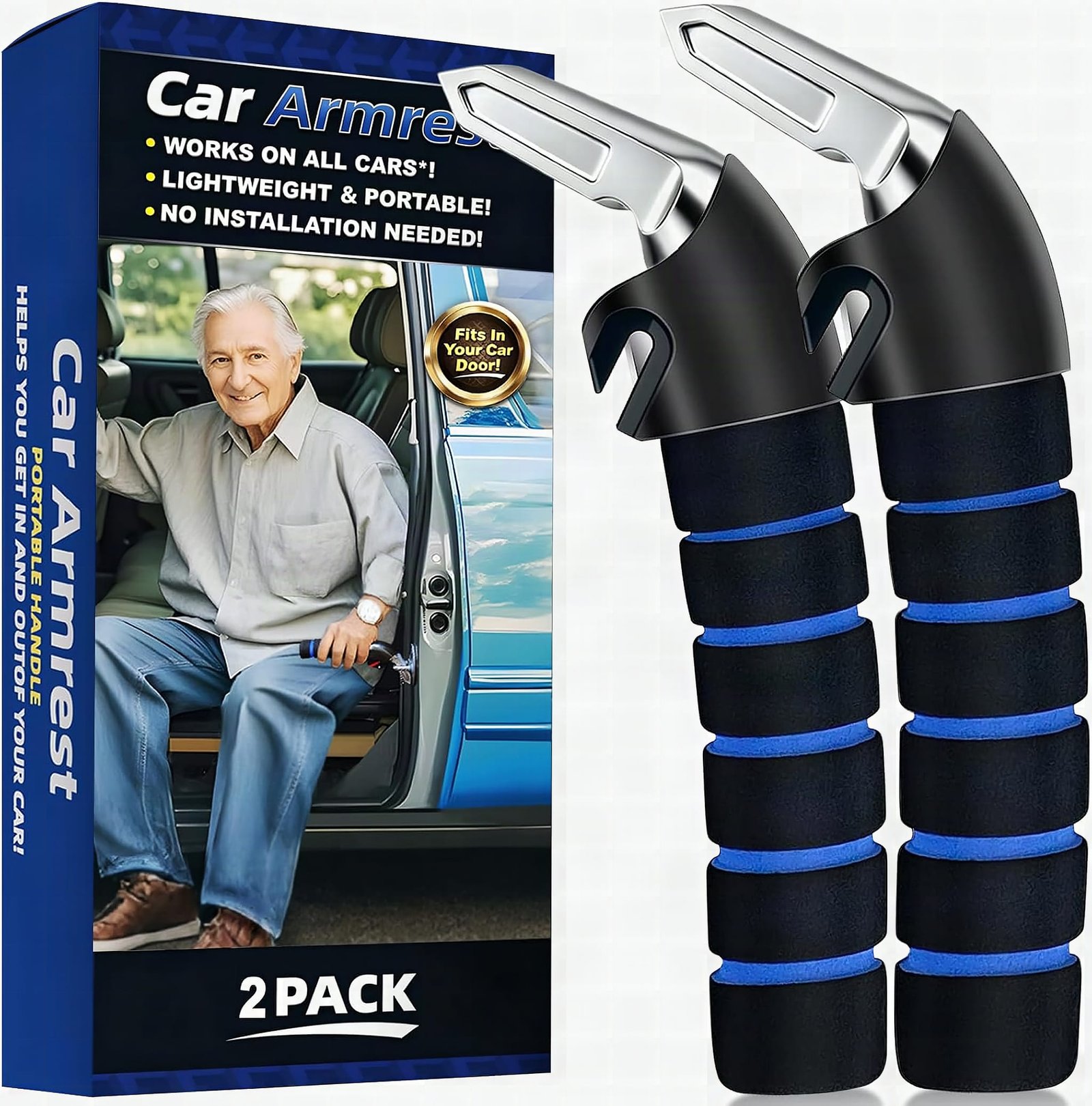
Watch anyone over 70 get out of a sedan and you’ll see the problem this solves: they grab the door frame, the door edge, or the steering wheel, all unsafe choices. Watch anyone over 70 get out of a sedan. They grab the door frame, or the top edge of the door, or the steering wheel. All three are bad choices. The frame is high and offers nothing to wrap fingers around, the door moves, and the steering wheel is behind you the moment you start to rise. The KOUNATSURI 2Pack Car Door Handle gives you the one thing that setup is missing: a solid, low-positioned grab point right where your center of gravity needs to shift.
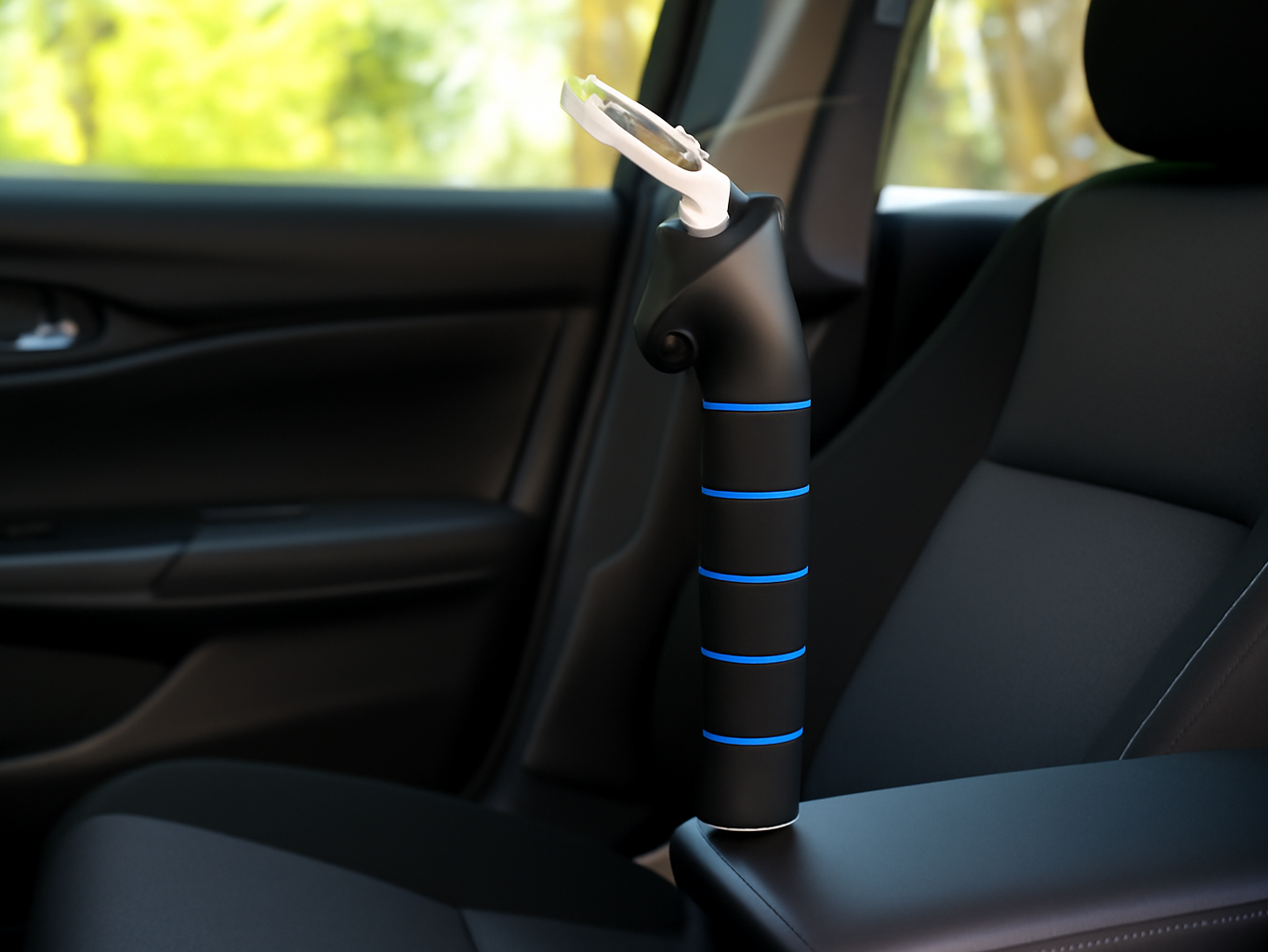
It slots into the U-shaped striker in the door jamb, the metal loop the door latch grabs when you close it. That loop is bolted into the body of the car. It is, structurally, one of the strongest small features on the vehicle.
What 400 lbs and a Sponge Sleeve Actually Mean
The 400 lb rating exists for the moment that isn’t calm or controlled, the stumble, the knee that buckles halfway up, the full drop onto the handle. Almost nobody loads a standing aid with their full body weight in normal use. The rating has to absorb the worst case, not the average one, and 400 lbs clears that bar with room to spare.
Forged steel with an anti-rust composite treatment matters here too. This thing lives in a door pocket that sees rain, slush and road salt. A rusted grab handle is a handle you stop trusting.
The sponge sleeve is the part I’d flag from an OT angle. Grip strength drops with age and with arthritis, and a bare steel bar concentrates pressure into the base of the fingers, which is exactly where arthritic hands hurt most. A padded, contoured sleeve spreads that load and lets someone pull with a relaxed hand instead of a clenched one. That’s not a comfort feature. That’s whether the product gets used at all.
The seat belt cutter and window breaker are genuine additions, not filler, mainly because of where the product lives. An emergency tool in the trunk is useless. An emergency tool in the door pocket, in your hand every time you exit, is one you’d actually reach.
The Latch Is the Whole Ballgame
Critical limitation: it only works on U-shaped latches, which rules out some vehicles entirely, check your door jamb first. The listing says “suitable for most cars,” and that’s fair, but “most” is not “all.” Some vehicles use a recessed or shrouded striker where there isn’t enough clearance to hook anything in. Check your own door jamb before you order. It takes ten seconds.
The other limitation is cognitive, not mechanical. This is a handle you have to insert every single time. For someone with memory changes or early dementia, a device that requires a setup step before every transfer is a device that gets skipped, or worse, gets reached for halfway through standing. If that describes the person you’re buying for, a caregiver needs to be the one placing it.
Living With It: Storage, Rust and the Two-Car Problem
Maintenance is minimal: wipe the foam sleeve when it gets grubby, check the steel for surface corrosion once a season if you’re in a salt-belt state. No batteries, no adhesive, no mounting hardware. There is genuinely nothing to replace.
The 2-pack matters more than it looks. One stays in the primary car, one goes in the spouse’s car or the adult child’s car, so the tool is wherever the person is. That’s the failure mode with most mobility aids: they live in the wrong vehicle. Two removes the excuse. You can 🛒 check the current price here.
Worth knowing on timing: it’s currently sitting a little under where it’s been priced for the past three months, and it’s selling noticeably harder lately, ranking around #3,508 in Health & Household against a 90-day average near #5,860, with Amazon reporting over 6,000 bought in the last month. That’s a product finding its audience, not a clearance item.
Who This Fits, Plainly
Buy this if you’re standing independently but need a grab point, covers post-surgery recovery, pregnancy, knee replacements, and older adults who struggle with car exits. That covers a lot of people: knee and hip replacements, pregnancy in the third trimester, anyone recovering from back surgery, and the enormous group of older adults who manage fine until the car. It is not a substitute for a transfer board, a swivel cushion, or hands-on assistance if someone genuinely can’t bear weight.
If you’ve watched someone haul themselves up by the door frame, or you are that person, the fix costs less than a tank of gas and fits in a glove box. Check the striker first; if it’s U-shaped, there’s no reason to wait.
Pros
- 400 lb rating leaves real margin for a stumble, not just a controlled stand
- Padded, contoured sleeve suits weaker or arthritic grip far better than bare steel
- Forged steel with anti-rust treatment for a tool that lives in a wet door pocket
- Seat belt cutter and window breaker stored where you’d actually reach them
- Two per pack covers a second vehicle
Cons
- U-shaped latch requirement rules out some vehicles entirely
- Must be inserted before every exit, which is a real barrier for memory impairment
- Supports the stand only, not the seated pivot that many people also struggle with
What we’d improve
Two changes that would widen who this works for:
- No vehicle fit guide · A short list of known incompatible striker designs would save a lot of returns.
- Grip sleeve is fixed length · A slightly longer sleeve would suit larger hands and two-handed pulls.
Frequently Asked Questions
Will it damage the door latch or paint?
The striker is forged steel bolted to the body, so it isn’t a delicate part. Repeated metal-on-metal insertion can scuff the striker’s finish over time, though it’s hidden when the door is shut. Seat it fully before loading so nothing rocks against the painted jamb.
Can it be used to get into the car, not just out?
Yes, and it’s arguably more useful on entry for controlled lowering. You insert it first, use it to steady the descent into the seat, then remove it. The limitation is the same either way: you need a free hand to place it.
Does insurance or Medicare cover something like this?
Generally no. Vehicle accessories fall outside durable medical equipment coverage in most plans, so this is almost always an out-of-pocket purchase. Some long-term care or veterans’ benefit programs have discretionary allowances worth asking about.
Clicking takes you to Amazon. As an Amazon Associate we earn from qualifying purchases — pricing and availability subject to change.
Get it now
KOUNATSURI 2Pack Car Door Handle
Get the best price on Amazon →Affiliate link. See the disclosure at the top of this post.