
Bialetti Moka Express: Is This Stovetop Espresso Maker Worth It?
A look at what the Bialetti Moka Express actually offers before you add it to your kitchen or camping gear.
As an Amazon Associate I earn from qualifying purchases. Some links on this site are affiliate links, if you buy though them I may make a commission at no extra cost to you.
| Made in | Italy, since 1933 |
| Material | Cast aluminum body |
| Heat source | Stovetop (not electric) |
| Use case | Home kitchen, camper, backpack |
Why Bialetti Sells The Same Pot For Almost A Century
Ninety-one years is a long time for any product to survive without a redesign. The Moka Express has lasted that long not because Bialetti forgot about it, but because engineers who tried to improve on the octagonal aluminum body and three-chamber pressure system kept arriving at roughly the same thing. The octagonal aluminum shape, the water chamber on bottom, the filter basket for grounds, the collection chamber on top, that’s the whole machine. No pump, no electronics, no descaling cycle. Steam pressure pushes water through the grounds and up into the top chamber, and that’s what produces the thick, crema-topped coffee people compare to real espresso even though it’s technically brewed differently.
The Misconception Buyers Bring In
People expect this to work like a Keurig with extra steps. It doesn’t. There’s no button, no auto-shutoff, no digital readout telling you it’s done. You listen for a gurgling sound and pull it off the burner. That’s the whole interface. Anyone expecting a “set it and forget it” appliance is going to be frustrated the first few times, and that adjustment period is probably the single biggest source of disappointed reviews for moka pots in general, not just this one. Once you know what to listen and watch for, it stops being a mystery and becomes muscle memory.
Who Actually Gets Value Out Of This
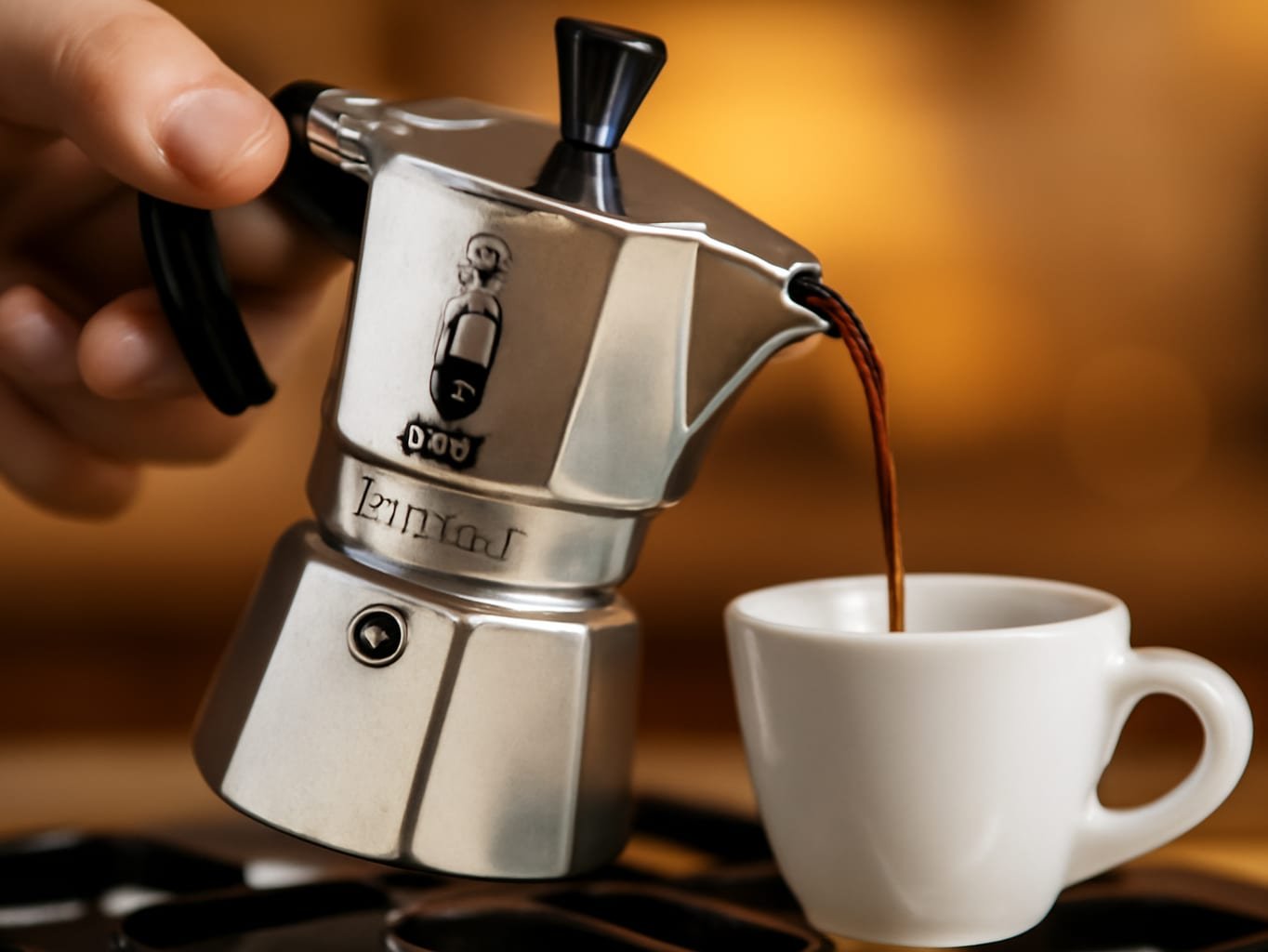
Travelers and campers are the clearest winners: no cord, no battery, and it runs on the same camp burner you use for soup, nothing to charge, nothing to blow a fuse. The other obvious fit is the drip-coffee drinker who wants something noticeably stronger and more concentrated but can’t justify an expensive espresso machine, the Moka Express lands that flavor profile at a fraction of the price and the footprint. Where it doesn’t fit: anyone who wants milk-based drinks like lattes or cappuccinos, since this only brews the base coffee. It also isn’t built for people who want zero learning curve, since getting the grind size and heat level right takes a few tries.
Pricing on the Moka Express can vary, so checking the current listing price before you buy is worth the ten seconds.
Pros
- No electricity or batteries needed, works on any stovetop or camp burner
- Simple three-part design with very few points of failure
- Produces stronger, richer coffee than a standard drip machine
- Compact enough to pack for travel or camping
- Long track record of durability going back decades
Cons
- No automatic shutoff, you have to watch and listen for it to finish
- Learning curve on grind size and heat level for the first few brews
- Doesn’t froth milk or make lattes/cappuccinos on its own
- Aluminum construction means hand-washing is generally recommended over a dishwasher
Clicking takes you to Amazon. As an Amazon Associate we earn from qualifying purchases, pricing and availability subject to change.
Get it now
Bialetti Moka Express
🛒 Check the current price on Amazon →Affiliate link. See the disclosure at the top of this post.