
TENS 7000 Digital TENS Unit: How To Set It Up Like A Pro
As an Amazon Associate I earn from qualifying purchases. Some links on this site are affiliate links, if you buy though them I may make a commission at no extra cost to you.
Quick Verdict
Four pads, two lead wires, one 9V battery, a hard case. The dial-and-button interface is dated, and that’s the trade.
Buy if you:
- Get TENS at physical therapy and want the same thing at home between visits
- Deal with recurring low back, sciatic, or neck pain and want a drug-free option
- Travel or commute and need something that packs into a hard case
- Want a unit a clinician will recognize instead of an unbranded gadget
Skip if you:
- Want a modern app-controlled unit. This runs on a 9V battery and physical dials, and you will be swapping batteries, not recharging
- Have a pacemaker, are pregnant, or have undiagnosed pain. Talk to a clinician before you plug anything in
- Can’t comfortably reach the area you want to treat. Pad placement on your own mid-back is awkward
| Power | One 9V battery (included) |
|---|---|
| Includes | Unit, 2 lead wires, 4 reusable pads, battery, manual, hard case |
| Channels | 2 (dual lead wires) |
| Modes | Multiple TENS therapy modes |
| On market since | 2008 |
Four pads and a 9V battery, out of the box
The TENS 7000 Digital TENS Unit ships with the four reusable electrode pads, two lead wires, the 9V battery, the manual, and a hard carrying case. Nothing to order separately before your first session. Nothing to order separately before your first session.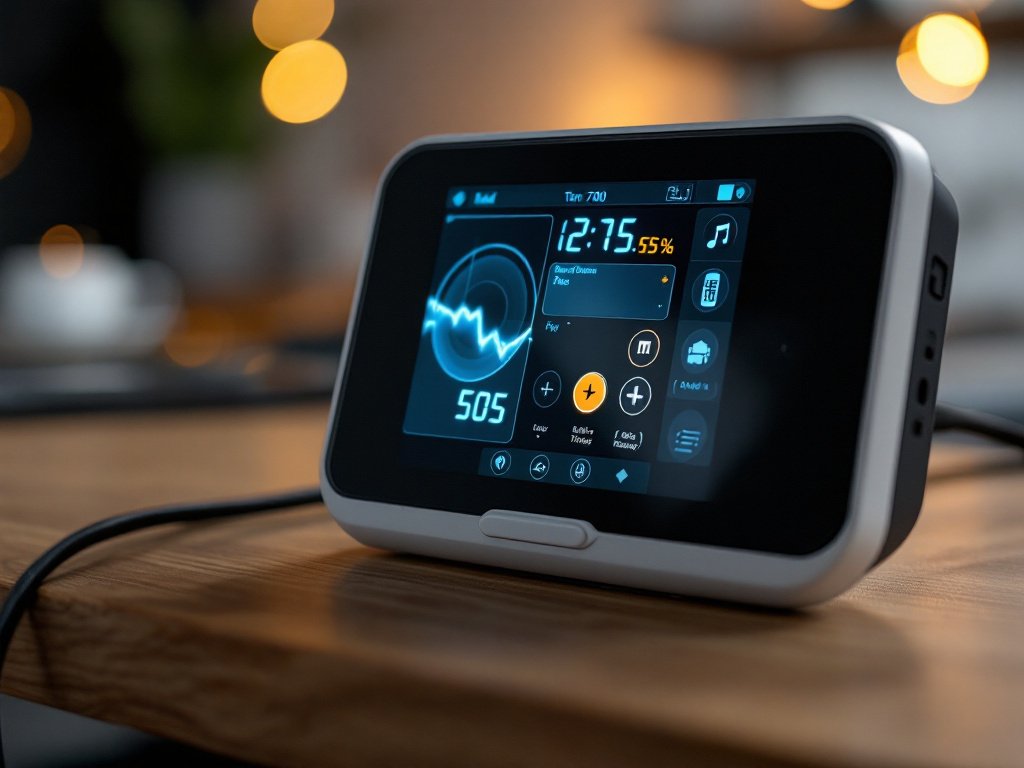
Two lead wires means two channels. Practically, that’s four pads working at once, which is what you want for something broad like low back pain. One channel, two pads, is plenty for a wrist or an elbow.
From an OT standpoint, the part worth flagging is placement. Pads go around the painful area, not on broken skin, not over the front of the neck, and not across the chest. If you’re treating your own mid-back, you’ll want a second pair of hands or a mirror.
What it costs you after the box is open
Two consumables: pads and batteries. The pads are reusable but not forever. They lose tack as skin oils and lint build up, and once a pad won’t stick evenly you get patchy contact and a hot-spot sensation instead of comfortable stimulation.
Rinse the gel side under cool water, let it air dry, and stick it back on the plastic liner. Store the liner in the hard case rather than loose in a drawer. That one habit is the difference between pads dying after five sessions and getting twenty or thirty out of them before the gel stops holding.
Batteries are the other running cost. No rechargeable pack here, no USB-C. You buy 9V batteries. Plan for it.
Is the money better spent elsewhere?
Against a single copay, the math is easy. A TENS unit you own is a one-time buy against therapy visits that recur, and the listing’s whole pitch is skipping the pharmacy line. That framing is fair for maintenance between appointments. It is not fair as a replacement for figuring out why you hurt.
This price moves around considerably, it has dropped well below its current level at points, so if you’re not in acute pain today, 🛒 check the live price before you buy. Waiting a week has beaten paying full ask before.
It currently ranks #1,543 in Health & Household, slightly softer than its 90-day average of #1,296, with more than 10,000 bought in the past month. Fewer sales than usual, still an enormous number of units. That’s a mature product coasting on a design people keep rebuying, not a fading one.
The thing buyers get wrong about TENS
TENS doesn’t fix anything. Buyers who expect a herniated disc to resolve with sessions end up disappointed with a device that’s doing exactly what it’s designed to do.
The second misconception is stronger equals better. It doesn’t. You’re aiming for a strong but comfortable tingle, not a muscle-clenching jolt. Crank it and you’ll end up with skin irritation and a device you stop reaching for.
And a TENS unit is not an EMS unit, even though the listing calls it a muscle stimulator. TENS targets nerves for pain. It isn’t a strength tool.
Who this suits, and who should pass
The ideal buyer has already felt TENS on a clinic table and wants that same relief at 10 p.m. without scheduling an appointment. Sciatica flare-ups, tennis elbow, a stiff neck from a bad night of sleep, recurring, familiar pain with a known trigger. If you’re still trying to figure out what’s wrong, this device won’t help you answer that question.
It suits people who like physical controls too. No pairing, no app, no firmware. Dial it, feel it, done. For anyone with low tech confidence, that’s an accessibility win, though the small buttons and print will be a strain if your vision or fine motor control isn’t great.
Pass if your pain is new, spreading, or paired with numbness or weakness. Get that assessed first. Pass if you want rechargeable and wireless, because this is a wired, battery-powered device and it isn’t pretending otherwise.
- Complete kit: unit, 2 lead wires, 4 reusable pads, 9V battery, manual, hard case
- Dual channels let you cover a broad area like the low back with all four pads
- Physical dials and buttons mean no app, no pairing, no firmware to manage
- A design on the market since 2008 with 3M+ units sold, so pads and parts are easy to find
Cons
- 9V battery only, no rechargeable option
- Pads are a recurring cost once they lose tack
- Small controls and fine print are tough with limited vision or dexterity
- Self-applying pads to your own mid-back is awkward without help
What we’d improve
Two changes that wouldn’t be hard for a next version:
- Battery format, a rechargeable pack with USB-C would remove the only true recurring cost besides pads.
- Control legibility, larger mode labels and higher-contrast printing would make the unit far easier for older users, who are a large part of the buyer base.
Frequently Asked Questions
Can I use it while lying in bed or sleeping?
Use it awake, not asleep. You need to feel the intensity to keep it comfortable, and wires plus an unattended device overnight is a skin irritation risk. Lying down during a session is fine.
Do the electrode pads fit other TENS brands?
Usually yes, if the connector style matches. Standard pin-style pads are widely available, which is one of the practical advantages of a unit that’s been around since 2008. Check the connector before you bulk-buy.
Is it safe over a knee or hip replacement?
Ask your surgeon or therapist first. Metal implants are a common question and the answer depends on the hardware and how recent the surgery was, so it isn’t one to guess at.
Clicking takes you to Amazon. As an Amazon Associate we earn from qualifying purchases — pricing and availability subject to change.
Get it now
TENS 7000 Digital TENS Unit
Get the best price on Amazon →Affiliate link. See the disclosure at the top of this post.